





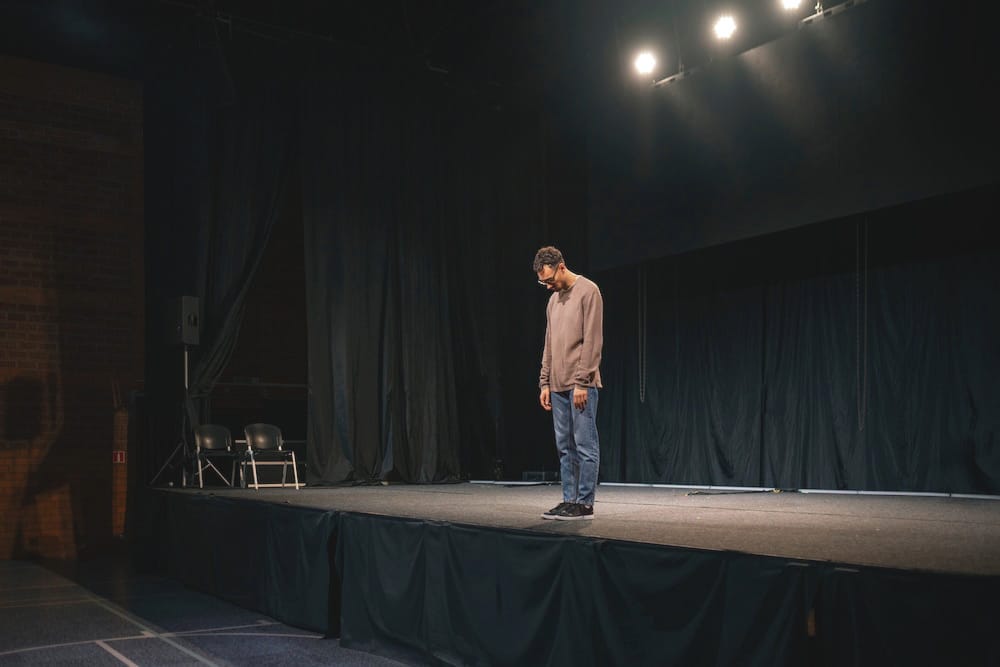
Imagine standing in a room full of eyes locked on you. Your heart thumps like a drum inside your chest. That’s glossophobia for you—the fear of public speaking that grips millions. I know it well. It once held me back from chances that could change my life. But this isn’t just my story. It’s a common struggle, one that feels like standing on the edge of a cliff. Fear of public speaking tops many lists, even above death for some. Yet, there’s a way through it. This journey shows how motivation and steps can turn dread into strength. It’s not quick, but it’s real.
The Anatomy of the Fear: Why Standing Up Feels Like Falling Down
Public speaking anxiety hits hard. It turns a simple talk into a nightmare. Let’s break it down.
Recognizing the Physical Manifestations of Glossophobia
Your body betrays you first. Heart races so fast it hurts. Hands shake like leaves in wind. Dry mouth makes words stick. Tunnel vision blurs the crowd. Sweat beads on your forehead. These physical symptoms of speaking anxiety are no joke. They make you feel trapped. I remember my knees buckling during a team meeting. It was just five people. But my pulse thumped loud in my ears. These signs scream fight or flight. They root deep in our wiring.
The Cognitive Roots: Perfectionism and Fear of Judgment
Your mind spins worst tales. “I’ll blank out completely.” Or “They’ll all laugh at me.” These cognitive distortions in public speaking fuel the fire. Perfectionism whispers you must nail every word. Fear of judgment paints the audience as critics. It’s a loop of doubt. Psychologists call it performance anxiety. It stems from past slips or high expectations. I once replayed a small stutter for days. That inner voice grew louder each time. But spotting these thoughts is the first crack in the wall.
Statistical Reality Check: How Common Is This Paralysis?
You’re not alone in this. Surveys show 75% of people fear public speaking more than death. The National Institute of Mental Health notes it affects one in five adults. Glossophobia ranks as the top phobia in the U.S. Public speaking anxiety statistics paint a clear picture. Even pros like actors feel it. A 2023 study found 40% of executives avoid promotions due to this fear. These numbers normalize it. If so many face it, why hide? It pushes us to seek change.

The Tipping Point: Identifying the External Motivator That Forces Change
Fear stalls us until something snaps. That push comes from life itself. It demands we act.
The Career Crossroads: When Fear Becomes a Professional Barrier
Picture this: a big promotion waits. But it needs a presentation to the board. I dodged it once. My boss picked someone else. Public speaking impact on career hit home. Opportunities slip away. Salaries stagnate. Networks shrink without that voice. In sales, I lost deals because I passed on pitches. Fear became a chain around my neck. It blocked growth. Many face this. A LinkedIn poll showed 60% link speaking skills to advancement. The stakes rise fast.
The Audience That Matters Most: Personal Stakes Beyond the Boardroom
Work isn’t all. Personal moments cut deeper. Like giving a wedding toast for my sister. I couldn’t skip it. Her eyes shone with trust. High-stakes speaking engagements like this force your hand. Or a child’s school play where you emcee. Avoidance hurts those you love. I stood at my graduation, mic in hand. Legs wobbled, but I spoke. The crowd cheered. Those ties outweigh solo fears. They pull you forward. What if you miss sharing joy with family?
Drawing Inspiration: Real-World Examples of Transforming Speakers
Look at Warren Buffett. He took a public speaking course early on. It boosted his empire. Or Maya Angelou, who stuttered as a child yet became a poet powerhouse. Her story shows grit wins. Historical figures like Demosthenes practiced with pebbles in his mouth to fix a lisp. He led Athens. Business leaders like Sheryl Sandberg credit Toastmasters for confidence. Famous people who overcame public speaking fear prove it’s possible. Their paths vary, but all started small. I drew from them during my low points. It lit a spark.
Strategic Toolkit: Actionable Steps to Build Speaking Resilience
Tools make the difference. Build them step by step. Turn fear into habit.
Preparation is Preemption: Mastering Content Over Performance
Focus on your message, not the show. Outline key points first. Practice transitions until smooth. Know your stuff cold. That lets you ad-lib without freakout. Tips for better public speaking preparation start here. Write a script, then ditch it. Rehearse in front of a mirror. I did this for a club talk. It flowed better than planned. Deep knowledge frees you. Worry less about polish. Share value instead. Audiences crave real info, not perfection.
Exposure Therapy Lite: Gradual Desensitization Techniques
Start tiny. Speak in a one-on-one chat. Then a small group. Build to bigger rooms. Gradual exposure speaking practice eases the edge. Record videos on your phone. Watch playback without judgment. Join local groups like Toastmasters. They offer safe spaces. I began with emails, then meetings. Each win stacked up. It’s like climbing stairs, not a wall. Track progress in a journal. Miss a step? No big deal. Consistency trumps speed.
Harnessing Adrenaline: Reframing Anxiety as Energy
That rush isn’t all bad. Call it excitement, not fear. Symptoms feel the same. Reframing anxiety as excitement for public speaking works wonders. Try power poses—stand tall for two minutes. It boosts hormones. Or repeat: “This energy helps me shine.” I used this before a pitch. Heart still raced, but I channeled it. Breathe deep to steady. Turn butterflies into fuel. It’s a mind trick with real power. Practice it daily.

The Day Of: Managing Acute Symptoms Under Pressure
Game day arrives. Stay calm. You’ve prepped. Now execute.
Pre-Presentation Rituals for Centering the Mind
Minutes before, ground yourself. Try the 4-7-8 breath: in for four, hold seven, out eight. Stretch your arms. Sip water slowly. Immediate tips for public speaking anxiety relief like these calm nerves. Walk the stage if you can. Visualize success. I did shoulder rolls before a talk. It loosened tension. Avoid caffeine. Eat light. These habits center you fast. They bridge prep to action.
Connecting Through Vulnerability: When Imperfection is an Asset
Own your humanness. If you stumble, smile and say, “Let me try that again.” Handling mistakes during a presentation builds rapport. Audiences root for you. They forget flubs quicker than you do. Share a quick story. “I get nervous too.” It draws them in. Vulnerability forges bonds. I tripped on a word once. Laughed it off. The room warmed. Perfection bores. Real connects.
Post-Presentation Analysis: Constructive Feedback Over Self-Criticism
After, review smart. Note one strength and one tweak. How to review your presentation performance matters. Ask a friend: “What worked?” Skip the pity party. Watch your video if recorded. Celebrate the delivery. I focused on audience nods, not my pauses. Growth comes from balance. Harsh self-talk stalls you. Kind review propels next steps.

Conclusion: The Journey Continues—Mastery is Ongoing
Glossophobia doesn’t vanish overnight. But you can manage it. Preparation and push make fear a tool, not a boss. My path from dread to decent speaker took time. Yours can too. The core? Face it head-on.
Key Takeaways:
- Fear hits body and mind; tackle both with prep and reframes.
- Strong motives—like career or family—outweigh hiding.
- Practice builds tough skin, step by step.
- Turn nerves into power on the big day.
Start small today. Pick one tip and try it. Your voice deserves to be heard. What’s holding you back? Step up. The crowd waits.
Also Read: Overcoming Fear of Failure: Embracing Success with Confidence
Discover more from NoseyPepper
Subscribe to get the latest posts sent to your email.











Pingback : Overcoming My Fear of Public Speaking: Glossophobia and the Push to Conquer It – Gospelchats.Com